ServicesFlat Roofing
Flat Roofing in Casa Grande
We repair and replace low-slope roofs on older homes. That means finding what past patches are hiding, replacing soft decking, and setting the membrane and drains so water leaves the roof instead of sitting on it. You get a written scope before any work starts.
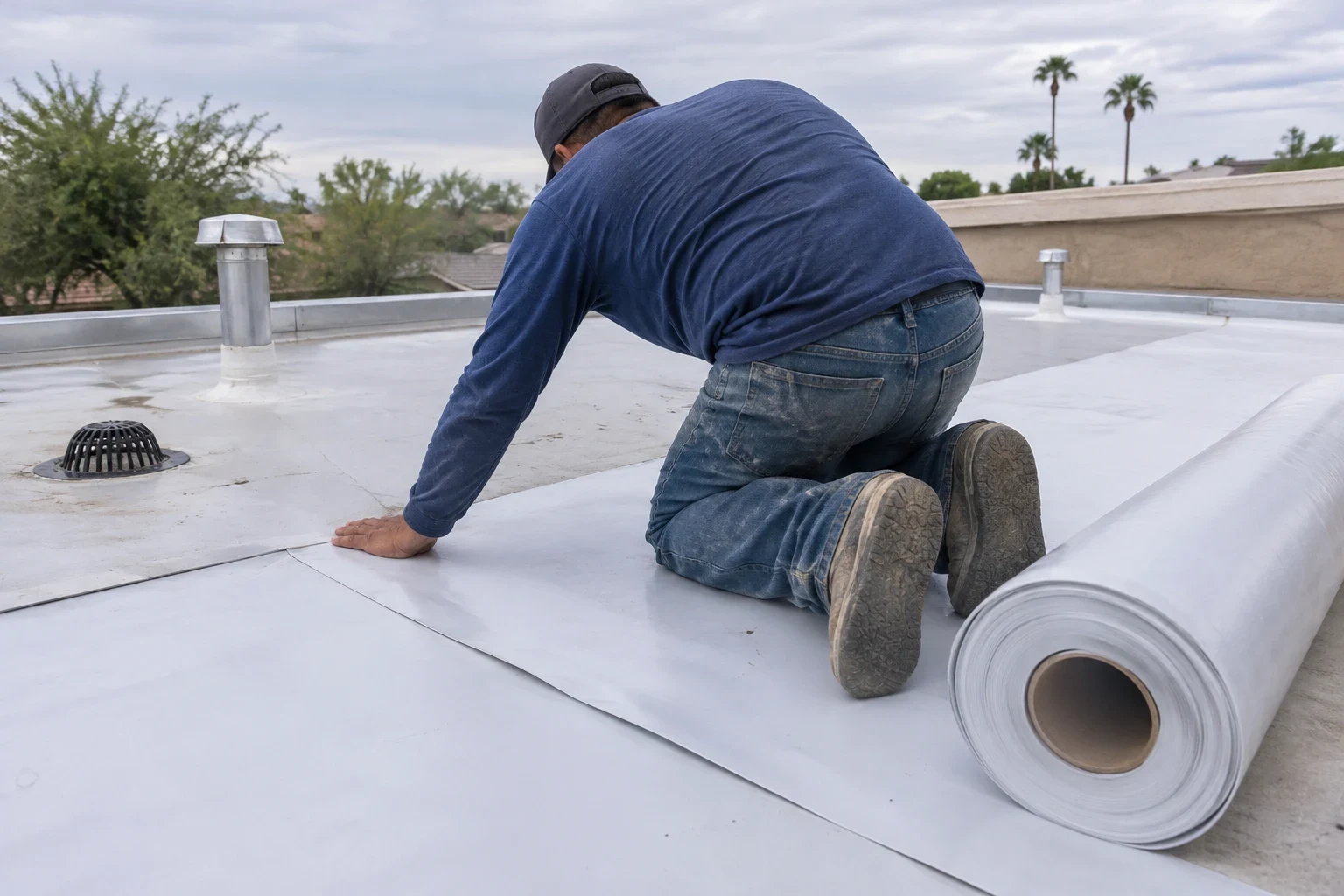
What flat roofing work covers
Low-slope roofs are built with a slight pitch, about a quarter inch of drop for every foot of run, so rain moves toward the scuppers or drains. Many older roofs no longer have that pitch. Decking sags between the joists, past crews added layers unevenly, or thick built-up tar patches left ridges that trap water. Ponding water wears out a flat roof faster than anything else, so every job starts with us tracing where water travels across the surface and where it stops.
We install granulated modified bitumen cap sheets and white TPO single-ply membranes, and we apply elastomeric coatings when the existing membrane is still sound. On older homes the roof is often several layers thick: gravel built-up roofing on the bottom, roll roofing over that, then a coating or two on top. Each layer adds weight, and any of them can conceal wet insulation or rotted plank decking. We open the roof, show you what is there, and give you a straight answer on whether patching makes sense or a full tear-off is the better use of your money.
What's included in a flat roof job
Tear-off to the deck
We remove old built-up, roll roofing and coating layers down to the sheathing. That way new material bonds to a clean, dry surface and doesn't trap moisture from the old roof.
Decking and slope correction
Soft or delaminated plywood and rotted plank boards get cut out and replaced. Where water has ponded for years, we add tapered insulation or crickets to restore drainage toward the scuppers.
Membrane installation
We install a modified bitumen base and cap sheet with lapped, sealed seams, or a TPO membrane with heat-welded seams. We'll explain which suits your roof's slope, foot traffic and equipment.
Parapets, scuppers and penetrations
Parapet walls get new base flashing carried up the wall and properly capped. Scuppers are resized or re-flashed when they sit too high to drain. Vent pipes, AC curbs and old evaporative cooler stands get new flashing, and abandoned openings are closed and decked over.
Coatings where they make sense
If the membrane underneath is dry and well adhered, an elastomeric coating can reflect heat and extend its service life. We won't coat over wet insulation, because that only seals the water in.
Cleanup and photos
Debris goes into a bin or trailer, and we sweep the yard and driveway for nails. You get photos of the decking and details we covered up.
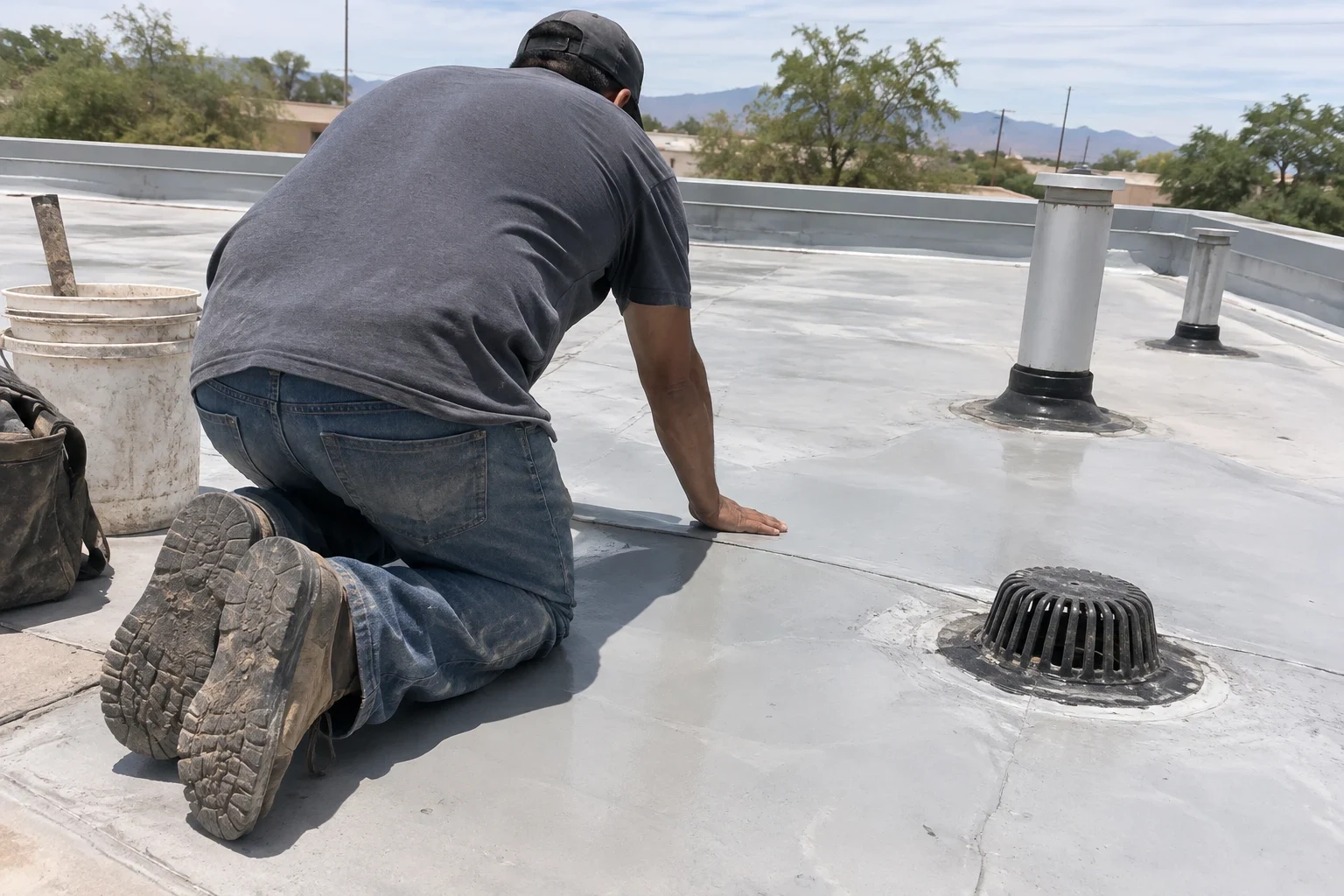
When a flat roof is telling you something
- Puddles that outlast the weekend
- Water still sitting more than 48 hours after a storm points to a sagging deck, blocked scuppers or lost slope. It wears the membrane down faster and puts extra weight on the framing.
- Blisters and alligatoring
- Bubbles in the cap sheet mean moisture got trapped or the sheet never fully stuck to the layer below. A cracked, scaly surface means UV has baked the oils out of the asphalt and the waterproofing is getting thin.
- Stains near walls and vents
- Ceiling stains below parapets or roof penetrations usually lead back to failed base flashing rather than the open field of the roof.
- Patch on top of patch
- Heavy tar or mastic patches show that earlier repairs went after drips without fixing what caused them. Those patches also split in the heat and create new paths for water.
- A spongy feel underfoot
- Soft spots usually mean wet insulation or decaying decking underneath. That damage keeps spreading until someone opens the roof.
How a flat roof job runs
- 1
Roof walk and core check
We walk the roof and look over the drains and flashing. If the layers aren't clear from the surface, we cut a small core to count them and check for moisture. You then receive a written, line-item estimate.
- 2
Permits and start times
If your job requires a permit, we file for it and handle the inspection. During the hot months our crews start at first light so asphalt products and adhesives go down at temperatures they can handle.
- 3
Tear-off and deck repair
We strip only as much old roofing as we can dry in before the crew leaves that day, so no open deck sits over your home through the night. Damaged decking is replaced as it turns up, and we photograph it before it gets covered.
- 4
Membrane, flashing and drains
The new membrane goes down first, then flashing at parapets, curbs and pipes. Scupper outlets are finished last.
- 5
Water test and walkthrough
When the roof allows it, we run water across it to confirm it reaches the drains. Then we review the photos with you and clean up the site.
What sets the price of a flat roof
The square footage of the roof is only the starting point. On older homes, the price depends mostly on what's under the surface and how much detail work the edges and equipment need. We itemize each part so you can see where the money goes.
- Number of old layers
- Every built-up or roll roofing layer adds tear-off labor and disposal weight. Gravel roofs take the most time to strip.
- Decking condition
- Replacing rotted plank or plywood is priced per sheet or board once it's exposed. We show you photos before we add it to the bill.
- Membrane choice
- Modified bitumen, TPO and coatings differ in material cost, install time and expected service life.
- Drainage and slope work
- Tapered insulation, crickets and resized scuppers add material, but they fix the cause of ponding instead of the symptom.
- Penetrations and parapets
- Each AC curb, vent pipe, cooler stand and linear foot of parapet flashing adds detail work.
Flat roofing questions
- Can the new roof go over my old one?
- Sometimes a coating or one recover layer works if the existing roof is dry, well adhered and within code limits on layers. Many older flat roofs already carry two or three layers, though, and some hide wet insulation. In those cases a tear-off is the only way to get a dry deck and correct slope.
- Is modified bitumen or TPO better for my house?
- Modified bitumen handles foot traffic and rough detail work well, which suits roofs with coolers and equipment. TPO's white surface reflects more heat and has heat-welded seams. We'll recommend one based on your roof's slope, penetrations and how often people walk on it.
- What about my old swamp cooler opening?
- If the cooler is gone, we remove the stand, close the duct opening with new decking and roof over it. A capped hole under a patch is a common leak source on older roofs.
- What warranty comes with a new flat roof?
- The membrane systems we install carry a 30-year manufacturer warranty through the roofing material providers. We'll explain what that coverage includes for the product you choose.
- Should I consider foam instead?
- Spray foam can work well on roofs with irregular shapes or many penetrations, and it adds insulation. Our Foam Roofing page covers how it compares, and we can talk through both options on the call.
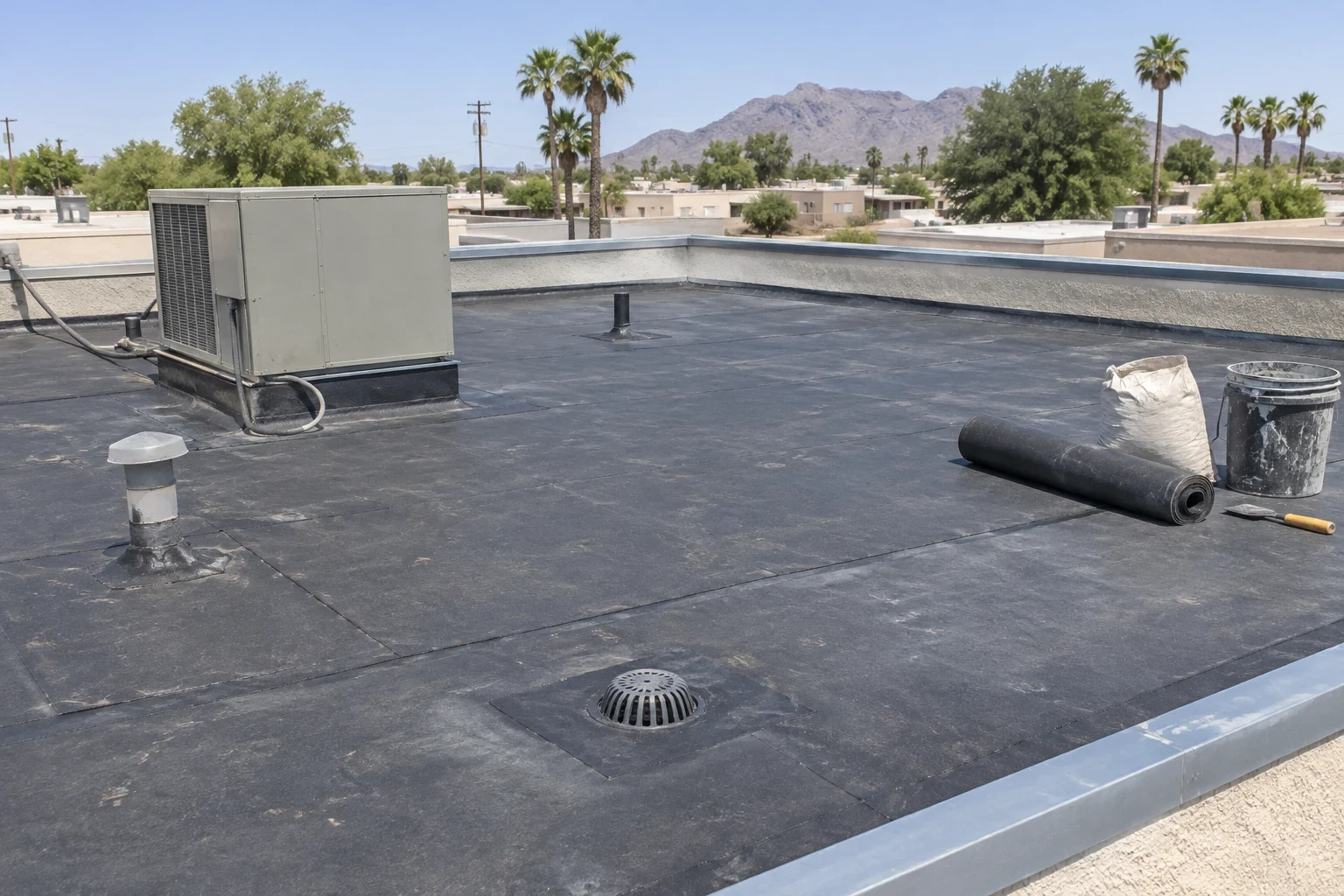
Find out what's under your flat roof
Tell us where it leaks, where water sits and how old the last repair is. We'll set a time to look at the roof and give you a written estimate. We serve Casa Grande, Maricopa, Coolidge, Eloy and nearby towns.