ServicesNew Roof Installation
New Roof Installation in Casa Grande
We build roofs where none existed before: room additions, casitas, detached garages and new houses. Most of our new installs join an older roof, so we plan the tie-in, flashing and drainage first. That way the new section and the old one shed water as one roof.
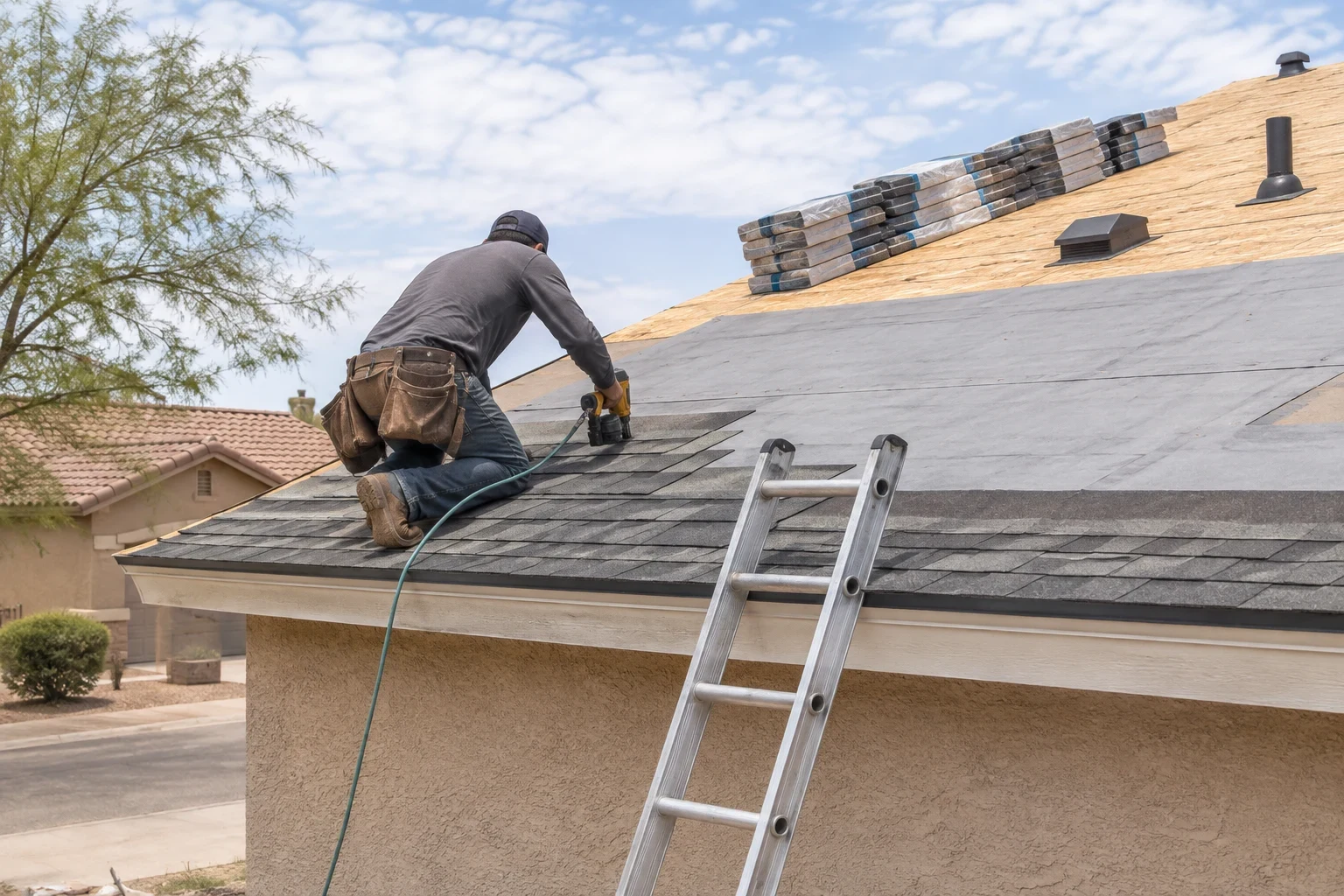
What New Roof Installation Covers
A new roof installation starts at bare rafters or trusses and ends with a finished, watertight roof. It is the right call when a structure has no roof yet. If your existing roof has simply worn out, our Roof Replacement page covers that work instead.
The roofing itself is the easier half. The harder half is where a new addition meets a house built in the 1970s, 80s or 90s. Rafter heights rarely line up, the original tile profile may be discontinued, and the old flashing at the joint is often decades past its useful life. We open that seam, look at what is really there, and design the connection around it.
We install tile, shingle and foam systems, so the new roof can match the main house or suit a low-slope addition better than the original material would.
What the Work Includes
- Decking and fastening
- We sheathe the framing with plywood or OSB, nailed on the pattern the system calls for. Tile is heavy, so we confirm the framing was sized to carry it before anything is loaded.
- Underlayment rated for heat
- Under tile we use a heavy two-ply or high-temperature underlayment, because tile only sheds most of the water and the layer underneath does the real waterproofing. Under shingles we lay synthetic underlayment with ice-and-water membrane in valleys and at the tie-in.
- Tie-in and flashing
- Where the new roof meets an existing wall or roof, we install step flashing, counterflashing into the stucco and, where water would pond behind a wall, a cricket to divert it. We replace brittle old flashing at the joint rather than lapping new metal over it.
- The roofing system
- Tile goes down on battens with proper headlap, shingles start with a starter course and sealed ridge, and low-slope sections get spray foam with a UV-protective coating. Our Tile Roofing, Shingle Roofing and Foam Roofing pages explain each system in detail.
- Attic ventilation
- We balance intake at the eaves with exhaust near the ridge. Moving that trapped heat out protects the underlayment and keeps the new room from running hotter than the rest of the house.
- Permit and cleanup
- We pull the roofing permit and work to the city's sign-off. At the end we sweep for nails with a magnet and haul off every scrap.
Signs a New Roof Installation Is What You Need
You are adding a room
An addition needs its own roof that joins the existing one without creating a low spot or a leak line at the seam.
A casita or detached garage is going up
Freestanding structures are simpler to roof, but they still need a system chosen for their slope and a match to the main house if appearance matters to you.
A previous owner enclosed a patio
On older homes we often find a porch walled in years ago under its original patio cover. Those covers were built to shade, not to keep a living space dry, and they usually need a real roof.
Your builder needs a roofer for the shell
If you are building a new house, we roof it once framing is up and the trusses are braced, coordinating with your builder's schedule.
The existing tile is no longer made
When the original profile is out of production, we plan the new section with salvaged tile, a close match or a deliberate change of material on that face.
How a New Roof Goes On
- 1
Phone call and site visit
You tell us what is being built. We come out, measure, check the framing or plans, and look closely at where the new roof will meet the old one.
- 2
Written line-item estimate
You get the materials, the tie-in work and the permit itemized on paper, with photos of anything we found at the existing roof that affects the job.
- 3
Permit and material order
We file the permit and order material. Tile can take longer to arrive, so we tell you the realistic lead time up front.
- 4
Installation
Decking, underlayment, flashing, then the roofing system. In summer we start at first light so adhesives, sealants and crews are working before the deck reaches peak heat.
- 5
Final walk and sign-off
We walk the finished roof with you, finish cleanup and see the permit through to its final approval.
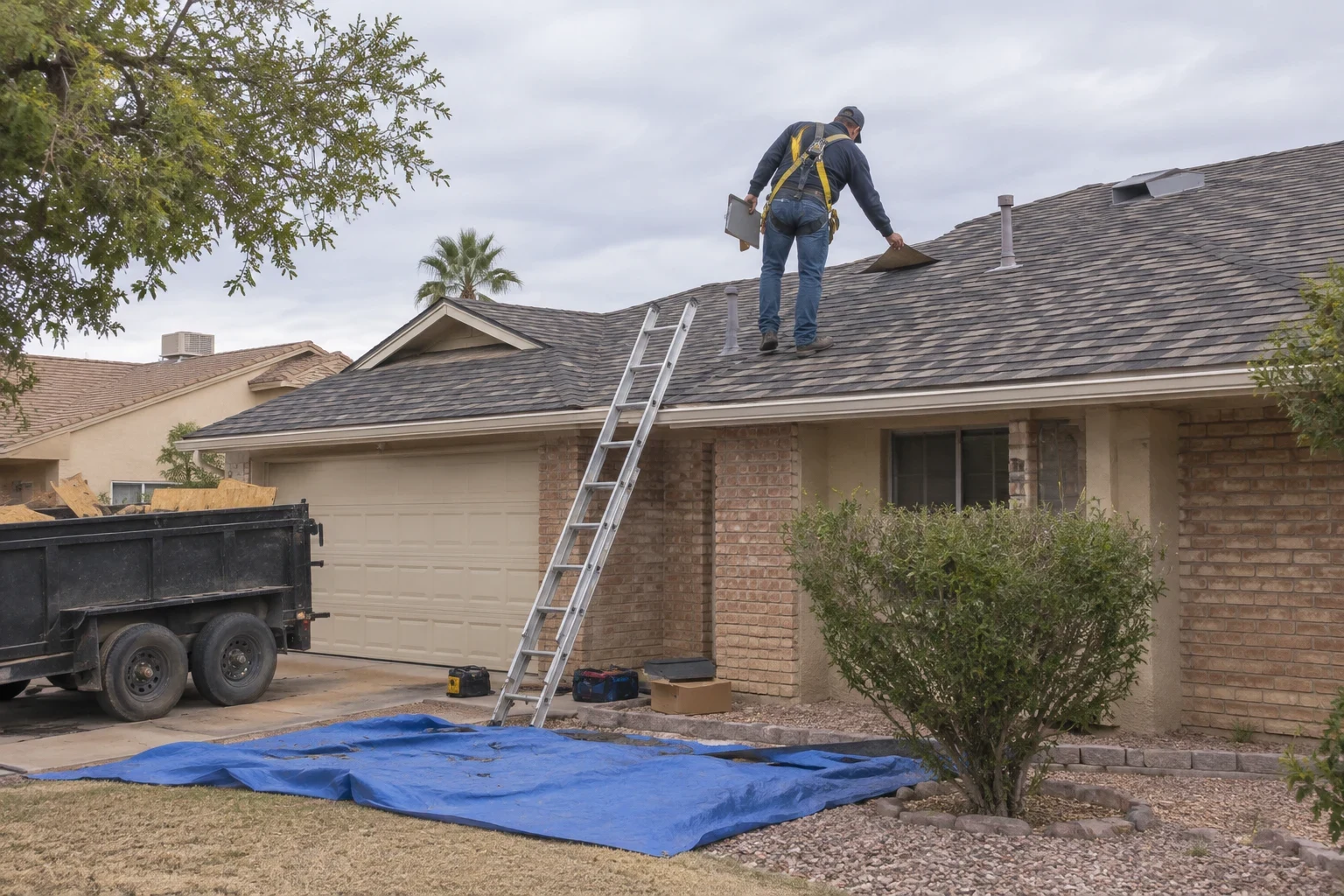
What Moves the Cost of a New Roof
We price each new roof from its own plans and measurements, so we will not quote a figure until we have seen the framing and the place where it joins your home. A handful of factors account for most of the difference from one job to the next. You will see every one of them broken out separately on the written estimate.
- Roof area and slope
- The number of squares to cover decides how much decking, underlayment and roofing we order. A steep roof also means setting up staging and working more slowly for safety, which adds crew hours.
- Which roofing system you choose
- Concrete tile, clay tile, architectural shingles and spray foam each carry different material prices, weights and install times. Heavier tile can also mean confirming the framing will carry the load.
- The joint between new and old
- Butting a new roof against one straight wall is simple work. Opening up an older roof, rebuilding a valley or pulling out decades-old flashing along a long seam takes more labor and more material.
- Valleys, hips and penetrations
- Every valley, hip, skylight, plumbing vent and HVAC curb gets its own flashing detail, so a cut-up roof costs more than a plain gable of the same footprint.
- Matching tile that is out of production
- Tracking down salvaged or discontinued tile can run higher than buying a current product. When a different material would serve that face better, we tell you so.
New Roof Installation Questions
Something not covered here? (520) 492-6369
How is this different from roof replacement?
Replacement tears off a worn roof and rebuilds it on the same structure. New installation roofs framing that has never had a roof, like an addition or new house. Many addition jobs involve some of both, because the old roof next to the tie-in has to be opened up.
Can you make the addition match my older tile roof?
Often, yes. We look for the same profile and color first, then salvaged tile, then the closest current match. If none of those will look right, we explain your options before you commit.
What warranty comes with a new roof?
The roofing materials we install carry a 30-year manufacturer warranty through the roofing material providers. We go over which product covers which part of your roof when we review the estimate.
Do you handle the permit?
Yes. We pull the roofing permit and schedule the work so the city's required sign-offs happen at the right stages.
Do you work outside Casa Grande?
We install new roofs in Maricopa, Coolidge, Eloy, Arizona City and Sacaton as well as in town. The process and the written estimate are the same wherever you are.
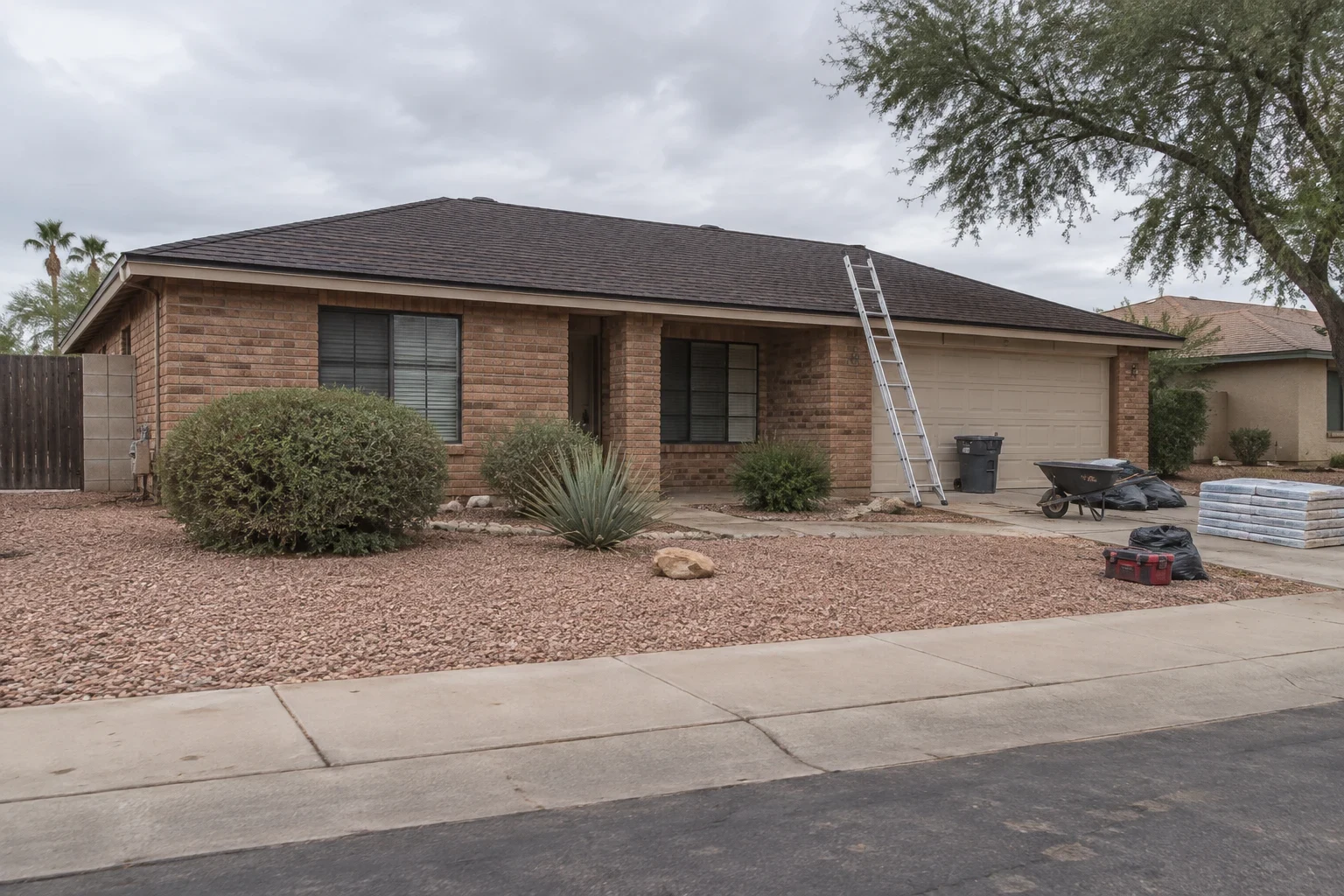
Building Something That Needs a Roof
Tell us what you are adding or building and how old the house is. We will set up a visit, check the framing and the tie-in, and put the details in writing.