ServicesFoam Roofing
Foam Roofing in Casa Grande
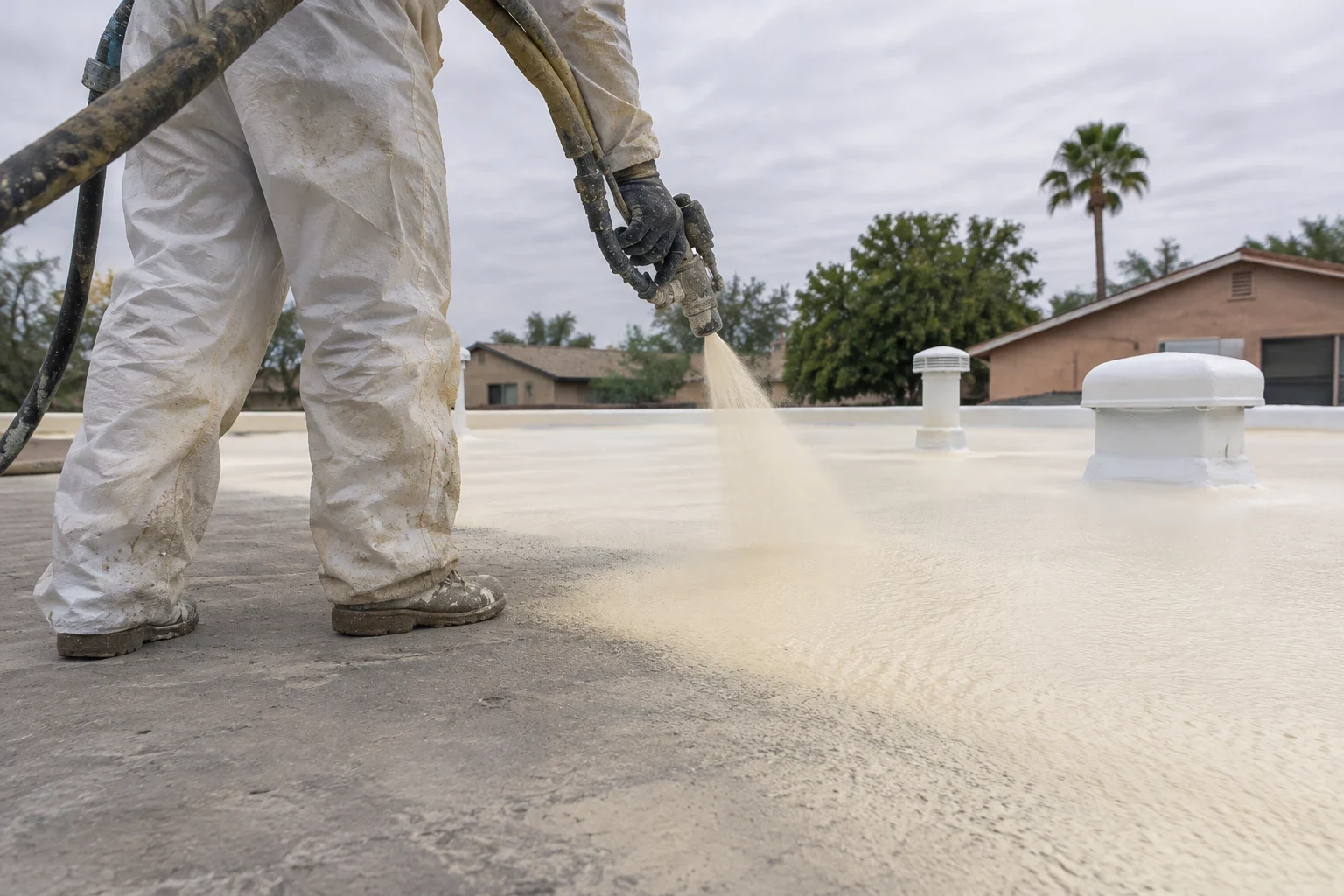
We spray polyurethane foam roofs on flat and low-slope homes, then seal them with a UV-blocking coating. On older roofs we check the old layers, rusted flashings and past patches before any foam goes down, so it sticks to something sound.
What a foam roof is and when it makes sense
A foam roof is closed-cell spray polyurethane foam applied as a liquid that expands into one continuous layer, usually about an inch or more thick. It has no seams and no laps, so water has nowhere to work in except where the foam is damaged. The foam itself breaks down in sunlight, which is why every foam roof gets an elastomeric coating, usually acrylic or silicone, that takes the UV and heat.
Foam is a strong fit for the flat and low-slope roofs common on older homes around Casa Grande, Maricopa and Coolidge. It can be built up to fill low spots that pond, and it adds insulation on top of the deck, which helps rooms under a flat roof in summer.
Roofs that have been up for a few decades are where the real work is. Many have tar and gravel, a rolled roof patched over a few times, or a previous foam roof gone chalky. Foam only lasts when it is sprayed over a dry, clean, well-attached surface, so deciding what stays and what comes off is the first thing we settle with you.
What our foam roofing work includes
- Substrate check and core cuts
- We probe the existing roof, cut small cores and look for wet insulation or loose layers. Foam over trapped moisture blisters and delaminates, so wet areas get removed.
- Tear-off or prep of the old roof
- Loose gravel is scraped, failed patches of roof cement are cut out and old foam that has eroded is ground back to firm material. Where the old system is too far gone, we tear it off to the deck.
- Deck and edge repair
- Soft or rotted decking found under old patches is replaced. We also deal with rusted drip edge, cracked parapet caps and outdated roof jacks around vents.
- Foam application and slope
- Foam goes on in passes to the planned thickness, built up where needed to move water toward scuppers or drains instead of letting it sit.
- Elastomeric coating
- A base coat and top coat of acrylic or silicone are rolled or sprayed to cover every inch of foam, with granules added on walk paths around coolers and AC units.
- Cleanup and overspray protection
- Walls, windows, vehicles and landscaping near the work area are masked and covered. We clear old roofing debris and gravel from your home and yard when the job is done.
Signs your roof may be ready for foam
Water ponding for days
Standing water after monsoon rain means the roof has low spots. Foam can be built thicker in those areas to restore drainage.
Chalky or exposed foam
If an existing foam roof looks tan or powdery, or the surface crumbles when you rub it, the coating is gone and UV is eating the foam.
Patch on top of patch
Flat roofs that have been around a while often carry years of roof cement and fabric patches. Each one is a seam that can open, and more patching rarely fixes the cause.
Blisters or soft spots
Bubbles in rolled roofing or spongy areas underfoot usually mean moisture between layers or a deck that is starting to fail.
Leaks around cooler and AC stands
Rooftop equipment is a common leak point, especially where stands were added years after the roof went on. Foam seals around curbs and supports as one piece instead of relying on flashing and caulk.
How a foam roofing job runs
- 1
Look at the roof and explain options
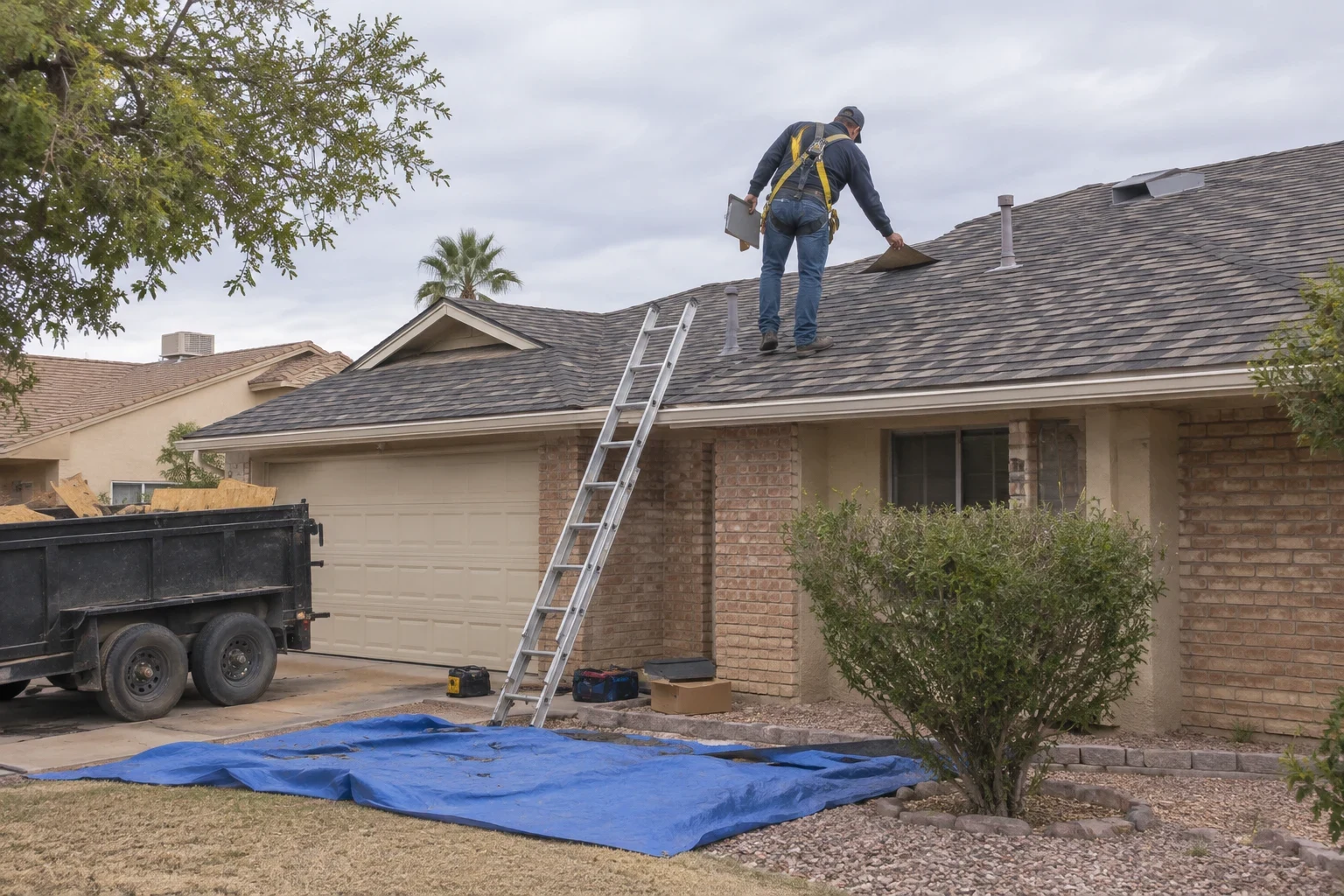
We walk the roof, take core samples and photos, and tell you whether the existing roof can stay under foam or needs to come off. You get a written estimate that lists the prep, foam thickness and coating type.
- 2
Paperwork and a spray window
If your job needs a permit, we file for it before work begins. Then we choose the day to spray. Foam needs a dry surface and calm air, so summer jobs often begin at first light, before the deck heats up.
- 3
Prep day
Masking goes up, old material is removed or cleaned, and deck and edge repairs are made. Nothing gets sprayed until the surface is dry and sound.
- 4
Spray and coat
Foam is applied in passes and checked for thickness. Coating follows once the foam has cured, with a second coat after the first sets.
- 5
Walkthrough
We show you the finished roof, point out walk paths and talk about keeping the coating in good shape over the years.
What affects the cost of a foam roof
Foam is priced mostly by area and thickness, but on older homes the prep can matter just as much. We list each part of the job separately in the estimate so you can see where the money goes and what we found on your roof.
- Tear-off versus spraying over
- A dry existing roof that is still firmly attached to the deck can sometimes stay as a base. Wet insulation, loose gravel or multiple old layers mean removal, which adds labor and disposal.
- Deck condition
- Rotted sheathing is common under roofs that have leaked and been patched for years, and it has to be replaced before foam goes down.
- Foam thickness and slope work
- Building up low areas to fix ponding takes more foam than a uniform layer.
- Coating choice
- Acrylic and silicone coatings differ in material cost, thickness and how they handle standing water.
- Rooftop equipment and edges
- Coolers, AC stands, vents, skylights and parapets each need detailing. More penetrations mean more prep and hand work.
Foam roofing questions
Something not covered here? (520) 492-6369
Can you spray foam over my existing roof?
Sometimes. If the old roof is dry, firmly attached and only one layer, foam can go over it after cleaning. If cores show moisture or loose layers, those sections come off, because foam over trapped water blisters.
Is there a warranty on a foam roof?
Yes. The roofing materials we install carry a 30-year manufacturer warranty through roofing material providers. We go over what that coverage includes for your specific foam and coating system before the job starts.
Why does foam need a coating?
Polyurethane foam degrades in UV light. Without a coating it turns brown, then powdery, and slowly erodes. The elastomeric coating blocks UV, reflects heat and is the part that faces the weather.
Will the overspray get on my house or car?
Foam can drift in wind, so we mask walls and windows, cover vehicles and plants near the work and only spray when the air is calm. If conditions change mid-job, we stop.
Is foam right for a pitched roof?
Foam is designed for flat and low-slope roofs. For steeper roofs we talk with you about tile or shingle roofing instead, and our Flat Roofing page covers other low-slope options.
Find out what is under your flat roof
Tell us about the leaks, ponding or old patches you have seen. We will set a time to look at the roof and explain whether it can be foamed over or needs to come off first.