ServicesTile Roofing
Tile Roofing in Casa Grande
We repair, re-lay and install concrete and clay tile roofs, with most of our attention on what sits under the tile. On older homes that layer is usually the real problem, and often the part past repairs got wrong. You get a clear written scope before any tile comes off.
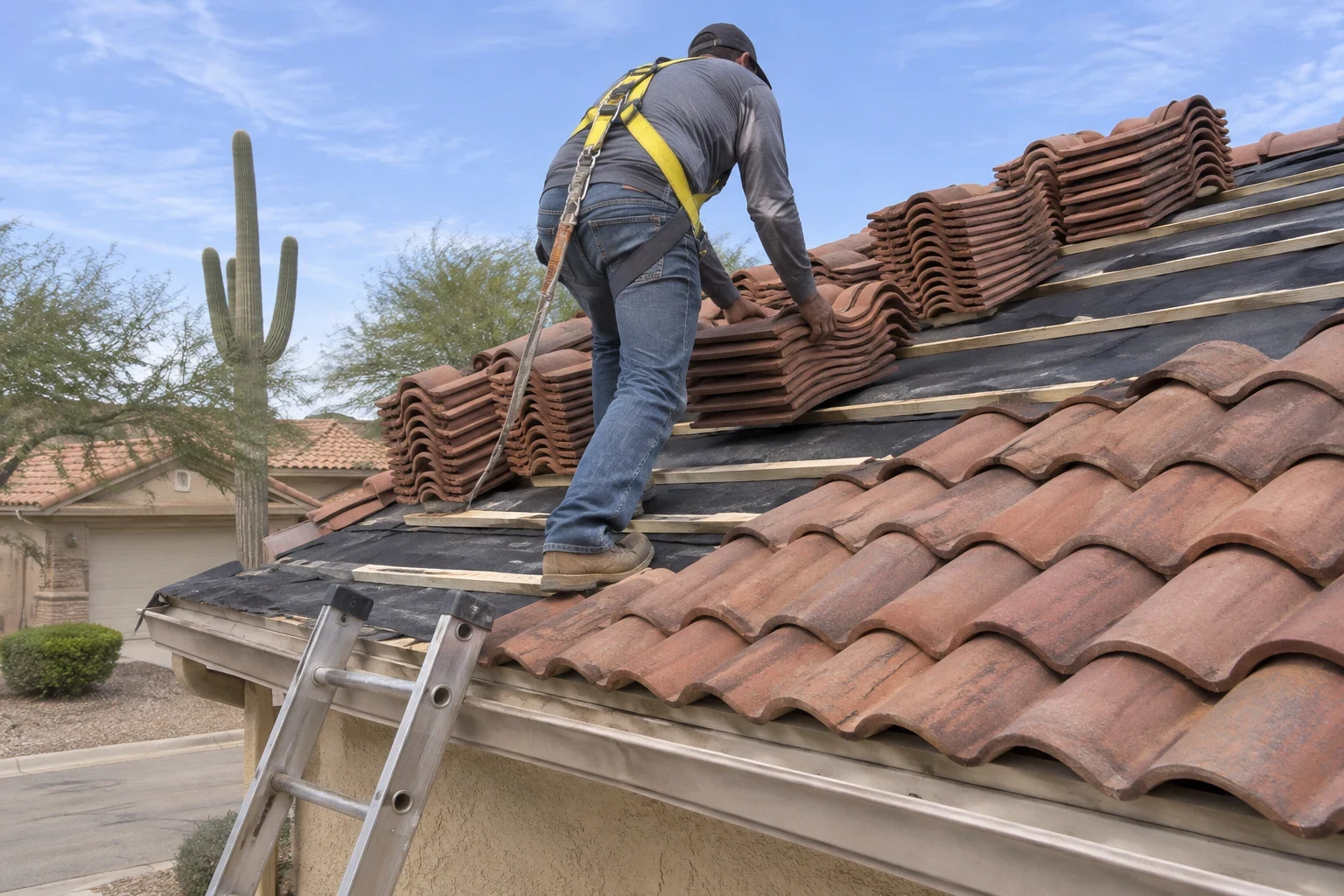
Tile lasts. The layer under it does not.
Concrete and clay tile can outlive the house it sits on. The tile itself is not the waterproofing, though. It sheds most of the water and shades the roof, while the underlayment beneath it, usually asphalt felt on homes of a certain age, keeps out whatever gets past. Under years of attic heat and UV at the edges, that felt dries, cracks and turns brittle long before the tile shows any wear.
That is why so many tile roofs leak while looking almost perfect from the street. On an older home we also find a history: a slipped tile glued back with roofing cement, a mismatched tile from a different profile, a skylight flashed with mastic instead of metal. Each one can hold for a while, then route water somewhere it should not go.
Our job is to sort out which of those things matter, fix them properly and tell you plainly whether your roof needs a targeted repair or a full lift and re-lay.
What our tile roofing work covers
Lift and re-lay
We remove the field tile, stack it on the roof, replace the old felt with new underlayment and reset the same tile on new battens where needed. The tile you already have goes back up, now resting on a new water barrier instead of tired felt.
Cracked and slipped tile
Broken tiles are replaced with matching profile and color where available, and slipped tiles are refastened rather than glued. Cement on top of tile tends to crack in summer heat and trap water.
Metal flashing
Valleys, headwalls, chimneys, pipe jacks and skylights get proper metal flashing. Old mastic patches at these spots are one of the most common leak sources we find.
Eave details
We replace deteriorated bird stop and eave riser, and check the first few feet of decking and fascia, where water and pests do the most damage on aging roofs.
Ridge and hip caps
Cracked mortar or loose caps are reset so wind-driven rain cannot work into the ridge line.
New tile installation
When the tile itself is done, we install new concrete or clay tile over a new underlayment system, backed by a 30-year manufacturer warranty through the roofing material providers.
Signs your tile roof needs attention
Ceiling stains after heavy rain
A stain that shows up after a monsoon downpour usually means the underlayment has failed under an otherwise intact tile. The leak inside rarely sits directly under the hole in the felt.
Cracked, shifted or missing tiles
Gaps expose the underlayment to direct sun, which speeds up its breakdown. A single slipped tile can point to rotted battens or rusted fasteners.
Roofing cement smeared on tile
Patches of black mastic mean someone repaired the roof quickly. We check what is underneath, because those fixes often cover a flashing problem rather than solve it.
Brittle felt at the eaves
Felt that flakes apart at the roof edge is a fair preview of the whole sheet. It has all lived through the same years of heat, so the hidden sections are rarely in better condition.
The original underlayment is 20 or more years old
Even without a leak, felt of that age is near the end of its working life on most tile roofs.
How a tile job runs
- 1
Walk the roof and the attic
We step only on the lower ends of tiles to avoid breakage, lift tiles at suspect areas and look at the attic side for stains and daylight. We photograph what we find so you can see it too.
- 2
Written scope
You get a line-item estimate that separates tile replacement, underlayment, flashing and any decking work. It also notes whether we expect to reuse your tile and how many replacements to plan for.
- 3
Protect and strip
We cover landscaping and walkways, then remove tile in sections and stack it on the roof. Old felt, battens and failed flashing go straight to the dumpster.
- 4
Rebuild and re-lay
Damaged decking is replaced, new underlayment and flashing go down, and the tile is reset with new fasteners and ridge work. Each section is closed up before we open the next.
- 5
Cleanup and walkthrough
We sweep for nails and debris, then show you photos of the finished underlayment and flashing before the tile covered them.
What moves the price of tile work
Tile jobs are priced by the scope of what is under the tile, not just by square footage. Two roofs that look alike from the street can need very different work. We price each part separately so you can see where the money goes.
- Repair versus full re-lay
- Replacing a few tiles and a flashing is a small job. Lifting the whole roof to replace underlayment is a much larger one, and we explain which you actually need.
- Tile reuse and availability
- Concrete tile usually survives a re-lay well, with some breakage. Discontinued profiles can be harder to match, which affects how many replacements we plan for.
- Decking and fascia condition
- Rot at the eaves or around old leaks only shows once tile and felt come off. We list a per-sheet price for decking up front so there are no surprises.
- Roof shape and pitch
- More valleys, hips, walls and penetrations mean more flashing and more labor. Steeper roofs take extra staging.
- Underlayment choice
- Heavier or synthetic underlayments cost more than basic felt but hold up longer under heat. We walk you through the options.
Tile roofing questions
Something not covered here? (520) 492-6369
Can you reuse my existing tile?
In most cases, yes. Concrete tile is sturdy, and we expect a small percentage of breakage during removal. We set aside matching replacements or pull tiles from less visible areas so the front of your home stays consistent.
My tiles look fine. Why would the roof leak?
Because tile is not the main waterproof layer. The underlayment beneath it does that job, and on older homes it is often cracked or brittle even when the tile is perfect. Past repairs with roofing cement at walls and valleys are the other common cause.
Do I need a full re-lay or just a repair?
It depends on the underlayment. If it is still flexible and the leak traces to one flashing or a few broken tiles, a targeted roof repair makes sense. If the felt is brittle across the roof, patching one spot usually just moves the leak.
What warranty comes with new tile?
New tile roofs we install carry a 30-year manufacturer warranty through the roofing material providers. We explain what it covers when we go over your estimate.
I have a flat section next to the tile. Can you handle both?
Yes. Many homes here have a low-slope patio or addition tied into a tile roof, and the joint between them is a frequent leak point. We can address that area with flat roofing or foam roofing as part of the same project.
Find out what is under your tile
Tell us what you are seeing, how old the roof is and any repairs you know about. We will set a time to look at it and give you a written scope.